Local specialisation, built community by community. Regional scale, connecting five West African countries.
Sierra Leone · Guinea · Liberia · Senegal · Ghana2026–2027AGI · C4D
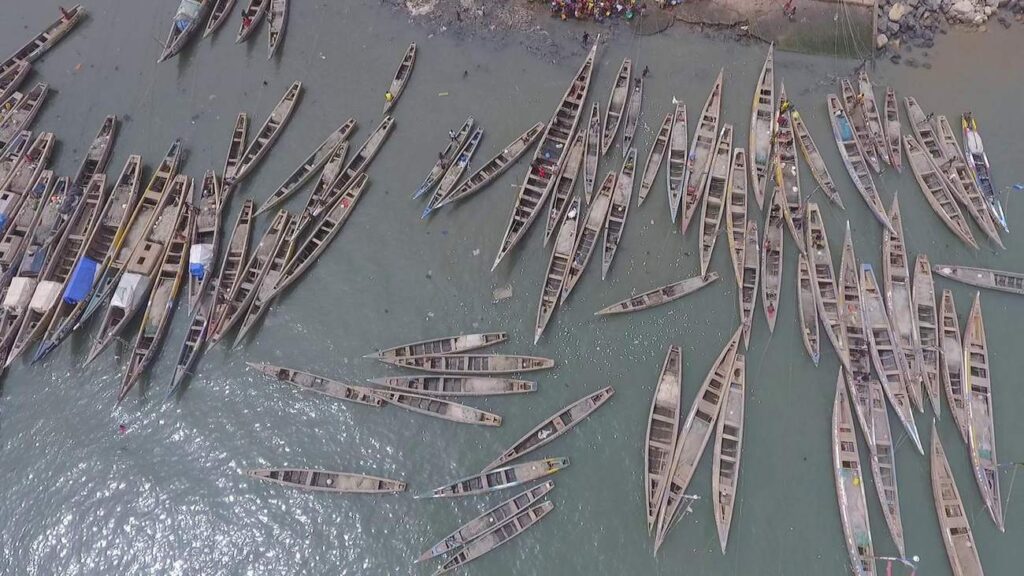
Fishing canoes along Sierra Leone’s coastline — the working heart of the coastal economy CFI is built around. — WeOwnTV
The Coastal Futures Initiative (CFI) is a regional climate resilience and green enterprise programme led by the Africa Governance Institute (AGI) across five West African countries: Sierra Leone, Guinea, Liberia, Senegal and Ghana.
The initiative aims to train at least 4,000 young people, particularly women, support viable green enterprises, restore vulnerable coastal ecosystems and strengthen youth participation in climate governance.
Through cross-border learning, regional partnerships, knowledge exchange and the replication of promising climate solutions, CFI connects communities, innovators, entrepreneurs and institutions to build a more resilient and prosperous coastal economy.
CFI builds on the experience of Gender-Anchored Climate-Resilient Growth (GACRG), pioneered by Craving 4 Development (C4D) in Sierra Leone.
GACRG introduced an integrated approach to community transformation, connecting women’s economic empowerment, environmental restoration, entrepreneurship, climate resilience and sustainable livelihoods. Its experience in Funkia demonstrated the potential of bringing communities, institutions and entrepreneurs together to address environmental challenges while creating economic opportunities.
Building on this foundation, AGI developed CFI into a five-country initiative, expanding the ambition from community-level transformation to regional cooperation and interconnected coastal climate economies. In Sierra Leone, C4D serves as the implementing partner, bringing its experience in community engagement, research, ecosystem building, enterprise development and climate-resilient livelihoods to the regional programme.
The Coastal Futures Initiative is designed to leave behind more than a trained cohort. Its ambition is to establish a lasting network of capable changemakers, specialised community learning sites, climate enterprises, restoration initiatives and institutional partnerships.
We envision a coastal economy in which young people and women transform environmental challenges into sustainable livelihoods; communities protect and regenerate their ecosystems; and promising African climate solutions access the expertise, markets and investment needed to grow.
Our long-term vision is an interconnected regional ecosystem where local innovation drives economic opportunity, community resilience and lasting environmental transformation.
Coastal Changemakers
Foundational climate and green-economy training
Immersion Fellows
Specialised practical learning with technical institutions
Climate Enterprises
Targeted incubation and venture development
The Sierra Leone programme pathway and targets.
Sierra Leone’s implementation is built around the Living Coast Model, which recognises that every coastal community has its own environmental challenges, natural resources, knowledge systems and economic opportunities.
Rather than applying identical interventions everywhere, CFI connects communities to specialised learning opportunities, experienced practitioners, technical institutions, entrepreneurs and markets.
The programme combines a common foundation in climate knowledge with place-based specialisation, practical immersion, enterprise incubation, ecosystem restoration and climate leadership. Its ambition is to transform Sierra Leone’s coast into a connected network of learning, innovation, environmental stewardship and sustainable enterprise.
Sierra Leone’s coastal communities face interconnected environmental and economic pressures, including coastal erosion, flooding, mangrove degradation, declining fisheries, post-harvest losses, unmanaged waste, inadequate sanitation and limited employment opportunities.
Yet these same communities possess valuable indigenous knowledge, natural resources, entrepreneurial potential and generations of experience in managing coastal livelihoods.
CFI builds on these strengths, recognising that effective climate adaptation must also create economic opportunities. By connecting environmental action to entrepreneurship, markets, finance and community ownership, the initiative seeks to make climate resilience a foundation for sustainable livelihoods and inclusive economic growth.
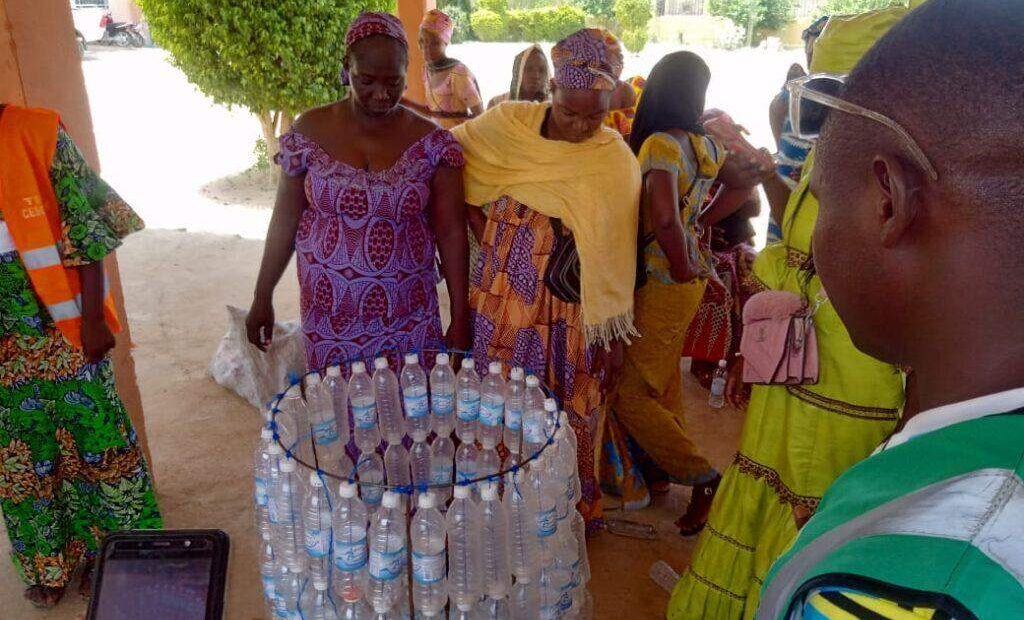
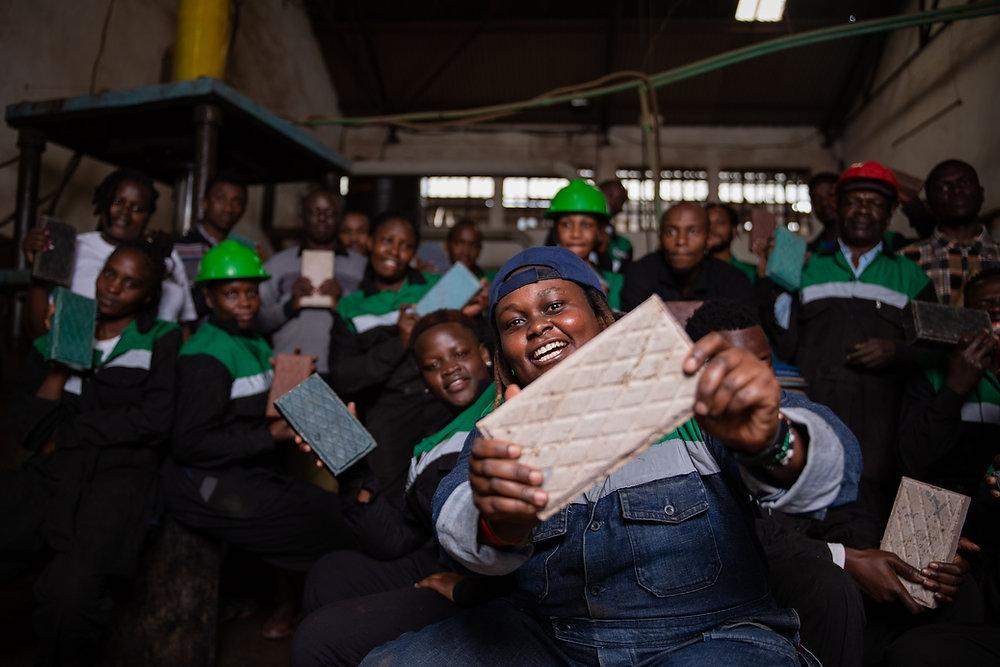
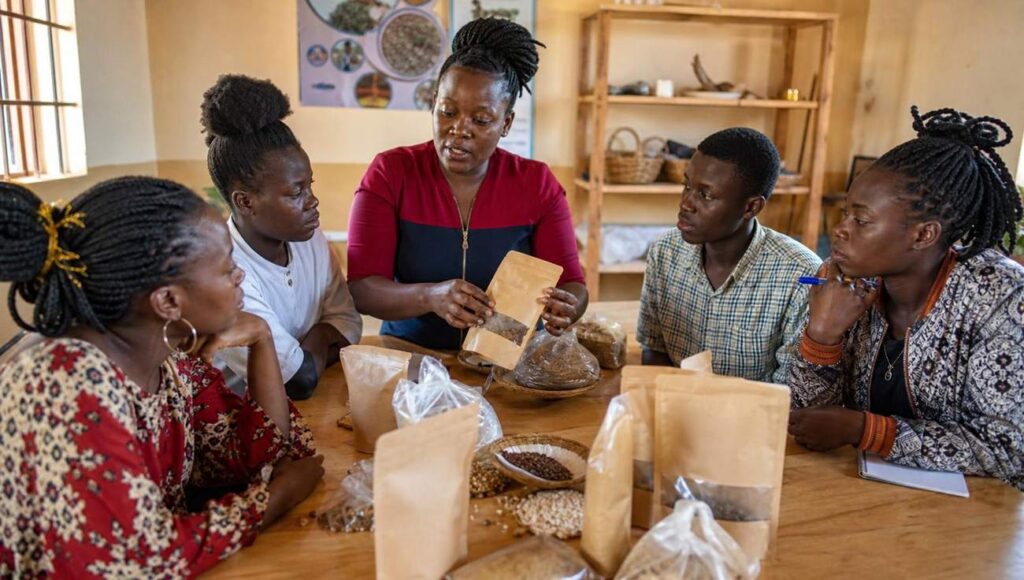
CFI’s foundational programme equips 800 coastal changemakers with practical knowledge of climate adaptation and resilience, coastal ecosystems, the blue and circular economies, climate-smart agriculture, renewable energy, green entrepreneurship, climate finance and environmental leadership.
Participants learn to understand their local climate challenges, identify economic opportunities and develop solutions that respond to their communities’ needs.
From the foundational cohort, 100 promising changemakers will progress into practical immersion programmes hosted by experienced organisations, enterprises and technical institutions.
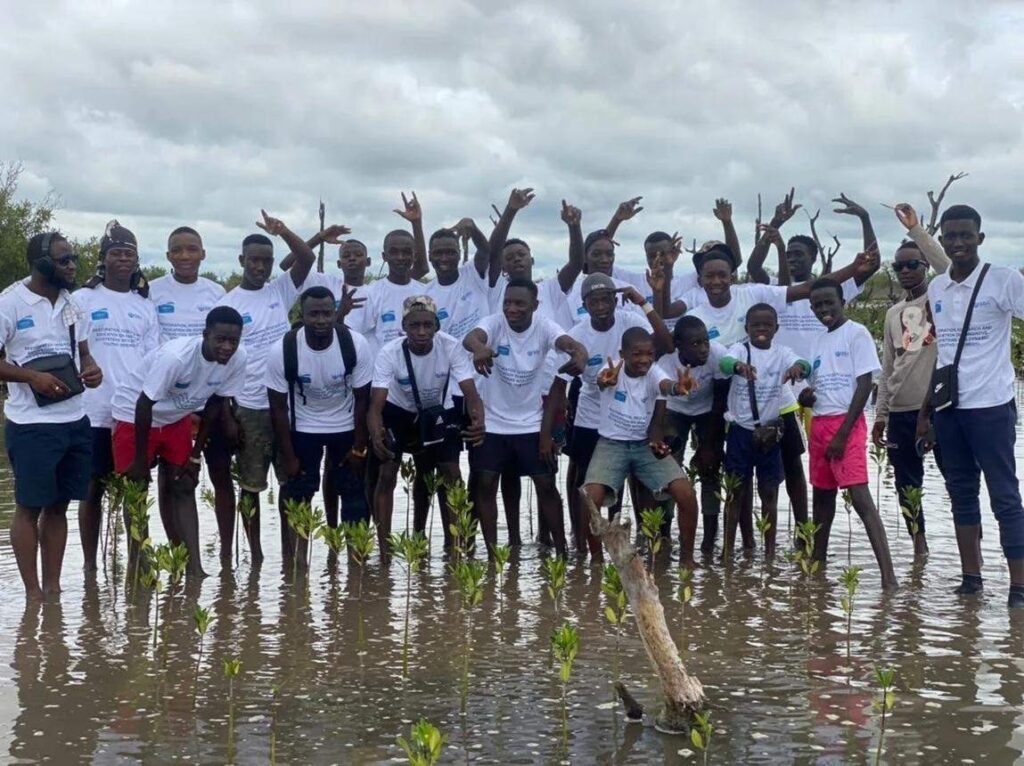
Participants will learn directly within functioning climate and environmental initiatives, gaining practical exposure to mangrove restoration, sustainable fisheries, recycling, waste-to-resource technologies, organic agriculture, renewable energy, resilient housing and other emerging green industries — connecting learning to real-world experience, technical expertise and opportunities for enterprise development.
Forty promising participants or venture teams will enter a four-month incubation programme designed to transform climate solutions into viable enterprises.
Through technical mentoring, business modelling, product development, market validation, financial management and investor readiness, CFI will support entrepreneurs to build businesses that create jobs, generate income and deliver environmental value. A dedicated high-growth pathway will also identify promising ventures with the potential for national and regional expansion.
Healthy coastal ecosystems are essential to resilient communities and sustainable livelihoods. CFI integrates mangrove restoration, biodiversity conservation, sustainable fisheries, community-led environmental monitoring and nature-based adaptation.
The programme also explores blue-carbon readiness, including ecological assessments and monitoring, as a potential pathway towards future climate-finance opportunities.
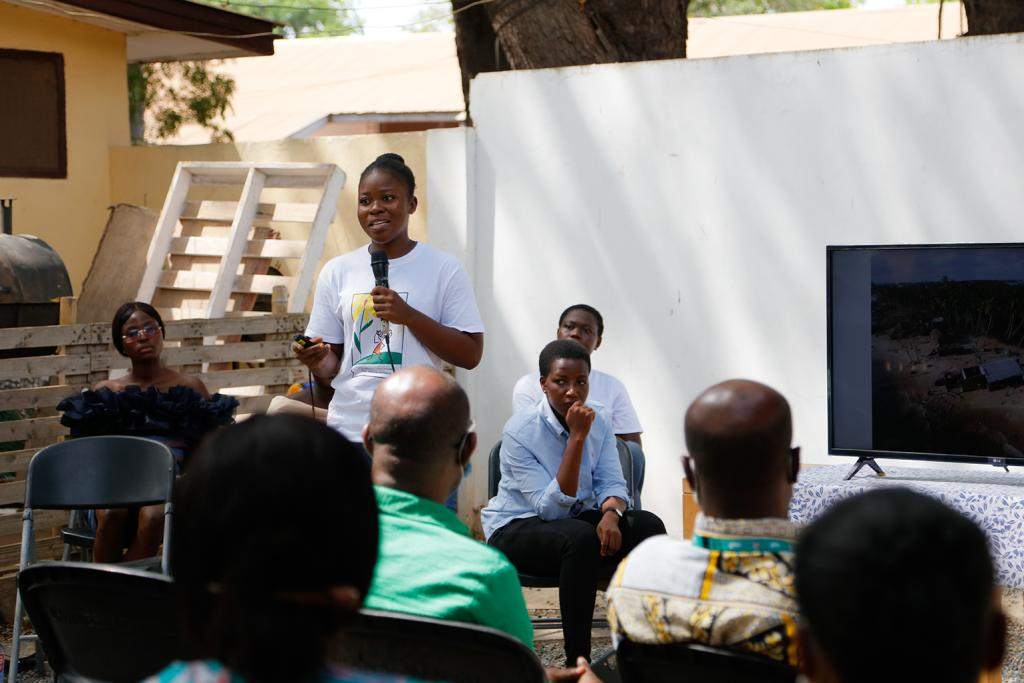
CFI recognises young people and coastal communities as essential contributors to climate policy and decision-making. Through youth leadership development, community consultations, climate storytelling, research, Pre-COP engagement and regional exchanges, the initiative seeks to strengthen community participation in national and international climate processes.
An important objective is to ensure that locally generated evidence, proposed solutions and community priorities can inform wider climate commitments and policy discussions.
CFI’s Living Coast Model recognises that coastal communities have different environmental challenges, productive assets and opportunities for economic development. The programme is developing specialised learning and demonstration pathways across several interconnected areas.
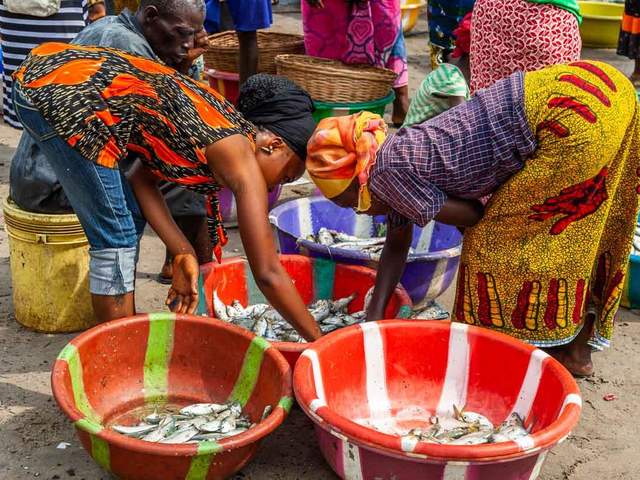
Fish preservation and processing, sustainable marine livelihoods, cold chains, reduced post-harvest losses and improved market access.
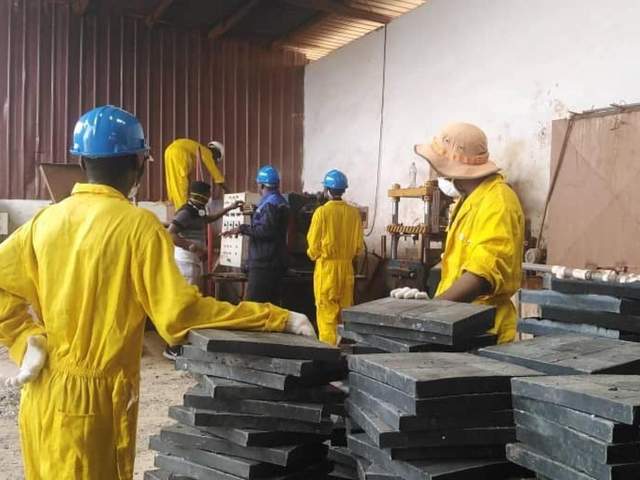
Plastic recovery, recycling, sustainable products, waste-to-resource technologies and circular business models.
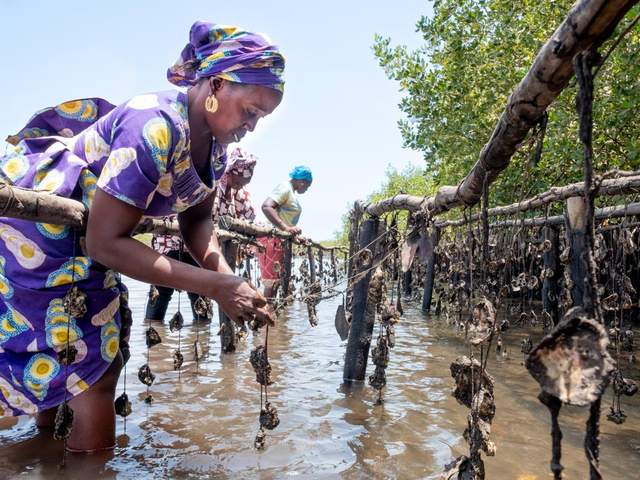
Community stewardship, oyster livelihoods, ecosystem monitoring, blue-carbon readiness and nature-based adaptation.
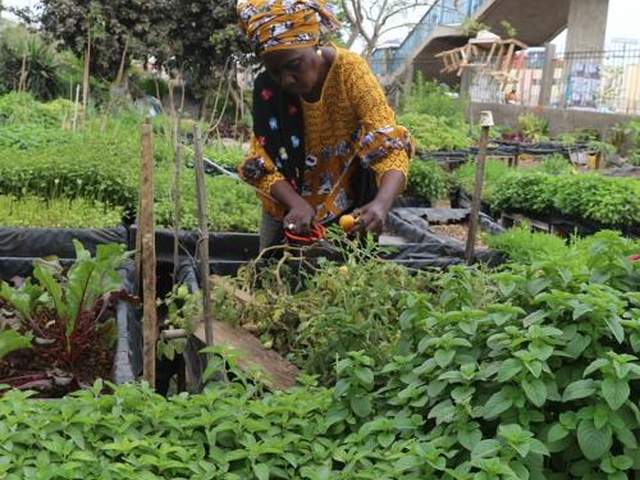
Urban gardening, composting, organic fertiliser, food processing and resilient agricultural value chains.
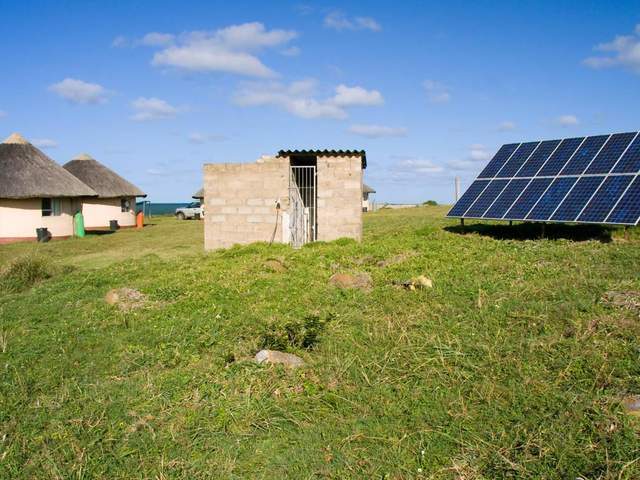
Clean energy, sustainable sanitation, climate-resilient housing, improved drainage and environmentally responsible construction.
Community-based tourism, biodiversity protection, sustainable island livelihoods, clean cooking and improved waste management.
Through partnerships with technical institutions, universities, environmental organisations, enterprises and community leaders, these specialisations will connect existing local knowledge with practical innovation and market opportunities.
CFI is also a platform for generating, documenting and sharing African knowledge on climate resilience and coastal economic transformation.
Through applied research, joint publications, policy briefs, community case studies and our Voices of the Coast storytelling series, we bring forward the experiences, aspirations and solutions of coastal communities.
Our knowledge and communications work connects community-generated evidence with researchers, development partners, investors and policymakers, while creating opportunities for learning and collaboration across the five participating countries.
By documenting both successful innovations and lessons from implementation, CFI seeks to contribute to stronger climate programmes, more informed policy discussions and the replication of locally developed solutions.
CFI brings together institutions and communities whose expertise, resources and experience complement one another.
Policy alignment, environmental governance and community engagement.
Scientific expertise, practical learning opportunities and environmental monitoring capacity.
Connecting emerging climate enterprises to markets, mentorship, technology and finance.
Technical assistance, institutional support and opportunities for scaling.
Above all, community organisations, traditional leaders, women and young people remain central to the identification, design, implementation and long-term ownership of local climate solutions.
Through AGI’s regional leadership and C4D’s implementation in Sierra Leone, CFI seeks to transform these partnerships into a connected and enduring climate innovation ecosystem.
CFI welcomes collaboration with government institutions, universities, technical organisations, development partners, businesses, investors and community organisations committed to resilient coastal economies.
Opportunities for collaboration include technical immersion, enterprise mentoring, research and publications, ecosystem restoration, climate finance, regional exchanges and market development.
By 2030, our goal is to establish a significant presence across the continent—impacting youth from all backgrounds and regions. We aim to achieve measurable, sustainable progress in social entrepreneurship, wealth creation, and business development.
Join us as we build the future of Africa—one changemaker at a time.
Bah Drive, 1st Bango Farm, Goderich, Freetown, Sierra Leone | Phone: +23290711890 | Email: Contact@craving4development.org
© 2026 Created by Tricad Design